
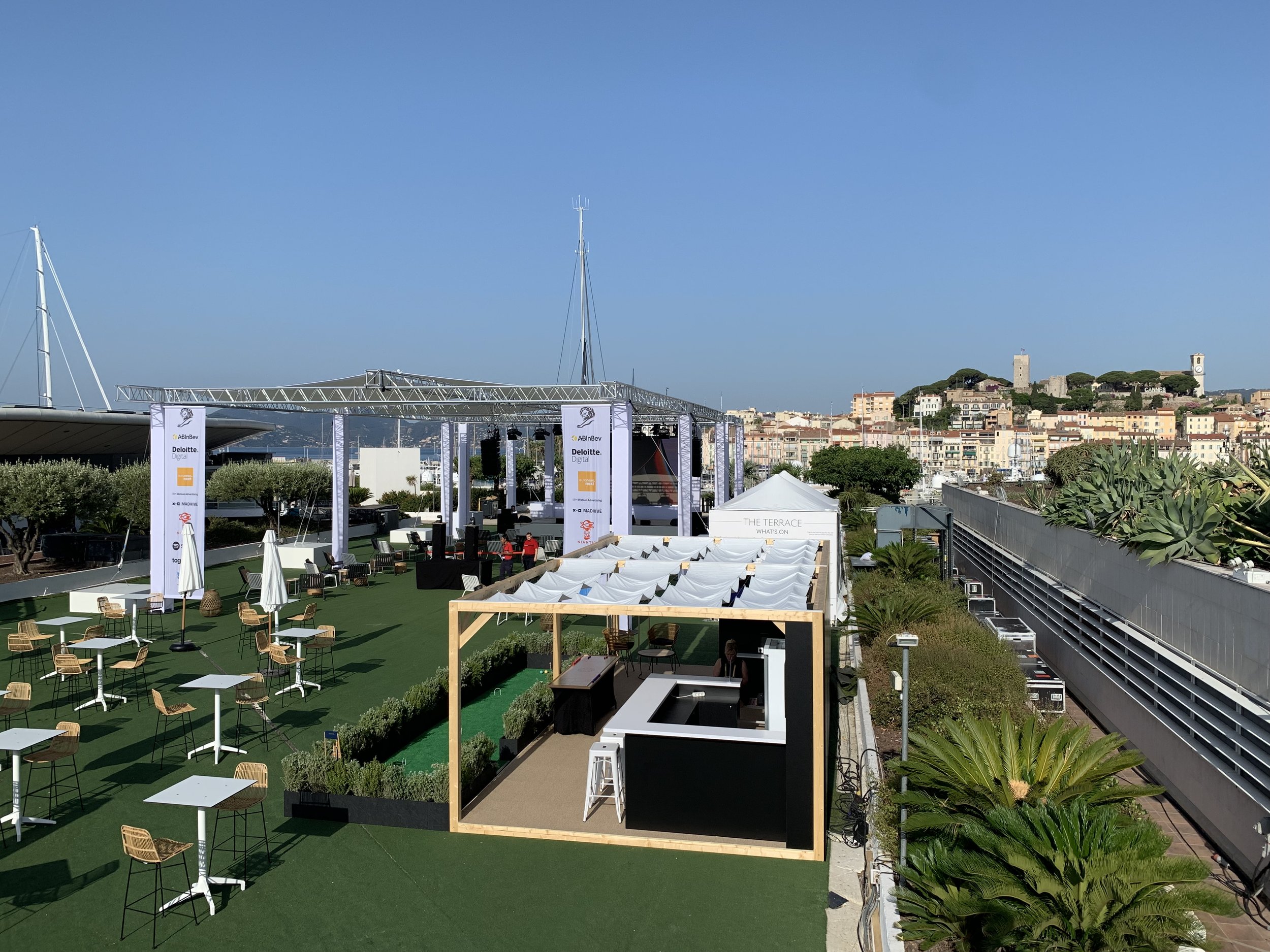
Day one: Cannes Lions 2022
My first day at Cannes Lions was action-packed, starting with Gary Kasparov and the Regain Ukraine brand using the power of creativity to support Ukraine in the war with Russia.
My first day at Cannes Lions was action-packed, starting with Gary Kasparov and the Regain Ukraine brand using the power of creativity to support Ukraine in the war with Russia.
The next session was with award-winning CMOs from AB InBev and Microsoft. Marcel Marcondes, AB InBev Global CMO, spoke about building great brands and that 'without trust, there is no greatness'. Trust takes time to develop, and I believe that it must be a goal that is a foundation for what you do. Kathleen Hall from Microsoft, who won the Cannes Lions Creative Marketer of the Year in 2021, spoke about the creative work Microsoft has done on inclusion in Gaming with new devices and controllers for differently-abled people. It was inspiring to see people transform when they could play like their friends using these devices for gaming and learning.
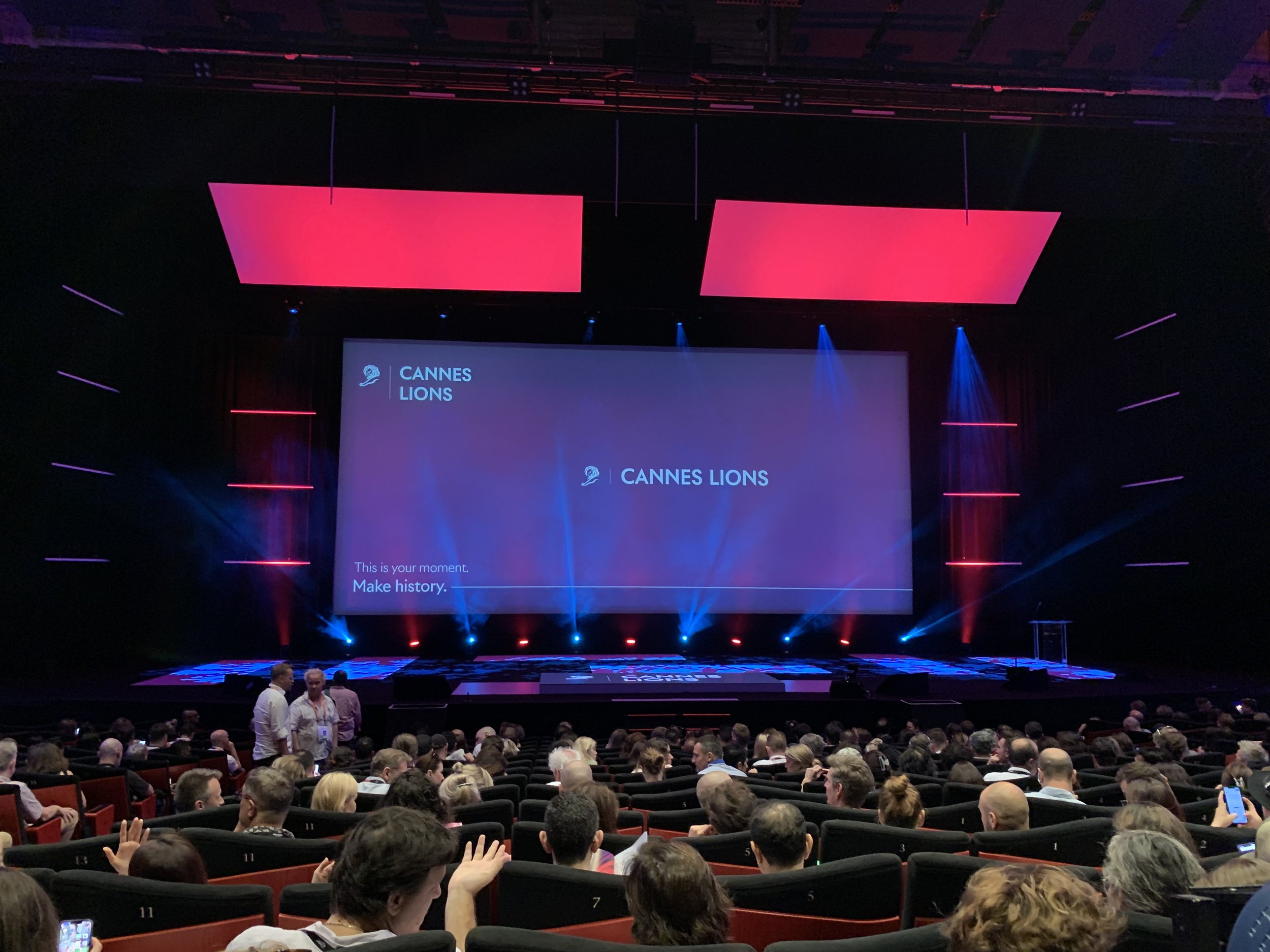
I then worked in a group led by Cindy Gallop on rebuilding the Agency model. I admire Cindy as an intelligent and thoughtful leader who, in her own words, 'likes to blow shit up. Cindy broke us out into six teams to build our agency based on new rules without reference to out-of-date models. This session was with talented specialists making a case for what is needed to achieve these goals. There are lessons I will take back with me to use with my teams.
We were then introduced to four creative industry members from Ukraine whose worlds have been turned upside down since February 24, when Russia invaded Ukraine—hearing the stories of people who lived exactly as we do in a modern European nation now suffering a war in Europe and their experience of 'creativity under bombs'. We were fortunate to be surprised with a special guest, Volodymyr Zelenskyy, President of Ukraine. Zelenskyy spoke about how this group of Marketing and Communications leadership could help Ukraine win the war by using branding as a tool and a weapon. Brave Ukraine is a brand to build, retain, and expand awareness of the atrocities being done daily in Europe.

The creative, brand, and marketing leadership of Nike then showcased three different approaches to working with your users to produce great results. The team from Nike spoke about how every one of us is an athlete. They did not talk about users or customers but athletes. The focus on the athlete is a vital part of the vision about who they serve and what they do for athletes. I learned about the goal of achieving the first sub-two-hour marathon and focusing on making products that deliver for athletes. Eliud Kipchoge of Kenya covered 26.2 miles in 2 hours 25 seconds - just 26 seconds short of the goal. The team then showcased the value of crazy dreams and checking if your goal isn't yet crazy enough to deliver the change you want. I have an action item to review my own goals. Finally, the team showcased the difference that can be achieved to normalise through cultural awareness and the introduction of clothing, and equipment to solve bespoke needs for groups such as pregnant women, Muslim women, and other athletes and the impact this can have on civil society.
Today I managed to make it to one of the secret speaker sessions. The speaker was AY Young, and I was introduced to him with a fist bump. AY sang, danced, spoke, and inspired a room full of creatives, communication, and marketing specialists through his work as a Young Ambassador Envoy for the United Nations and the 17 Development goals. It’s not easy to have a room full of grown adults singing, ‘we can change the world’. AY is an inspiring young performer focused on improving the world by delivering the 17 Development Goals of the United Nations. Do you know what? We can change the world, and we are the only people who will do it.
We organised the day's sessions with the Geena Davis Institute on Gender in Media. Founded initially to monitor and rebalance gender and gender roles in the media, their research now examines the intersectional onscreen representation of six identities: gender, race, LGBTQIA+, disability, age 50+, and body type. In many areas, there has been significant improvement in the representation of these identities in essential roles, including speaking and being in leadership positions. I will take away ideas from this as a framework to better present all of us.
This was a huge day with a massive amount of discussion, learning, and reflection on the power of creativity to change the world. As a creative leader, I believe we can change the world.
#CannesLions2022 #IONatCannes

Big feelings ... and early signs of burnout
One of the best books I read during the pandemic is No hard feelings about emotions at work and how they help us succeed.
I read this book for perspective and tips to stop getting stuck in unhealthy patterns and to build a successful team and culture. I highly recommend reading it to help improve your perspective and how you approach every day for yourself and your team.
One of the best books I read during the pandemic is No hard feelings about emotions at work and how they help us succeed.
I read this book for perspective and tips to stop getting stuck in unhealthy patterns and build a successful team and culture. I highly recommend reading it to help improve your mindset and how you approach every day for yourself and your team.

A Swiss Army knife illustration showing different emotional tools. By Liz Fosslien.
The two authors, Liz Fosslien and Mollie West Duffy, have a new book about to be published called Big Feelings: How to be okay when things are not okay.
The early signs of burnout
So what early signs should you look out for? Here are some of the subtle cues that you might need to reassess how much you’re taking on:
Basic activities like going to the grocery store feel overwhelming
Getting mildly sick and being forced to shut down for a bit actually sounds kind of nice
You’re saying “yes” even though you’re already at capacity
You find everyone and everything irritating
You’re all too familiar with “revenge bedtime procrastination,” when you stubbornly stay up late because you didn't get any time to yourself during the day
We’re quick to ignore these signs because we can usually muscle through them. But they’re important alarm bells.
These are all issues that I have experienced myself, and seen in members of my team. I have pre-ordered my copy in hardback as I think it's a book I want to be able to share.
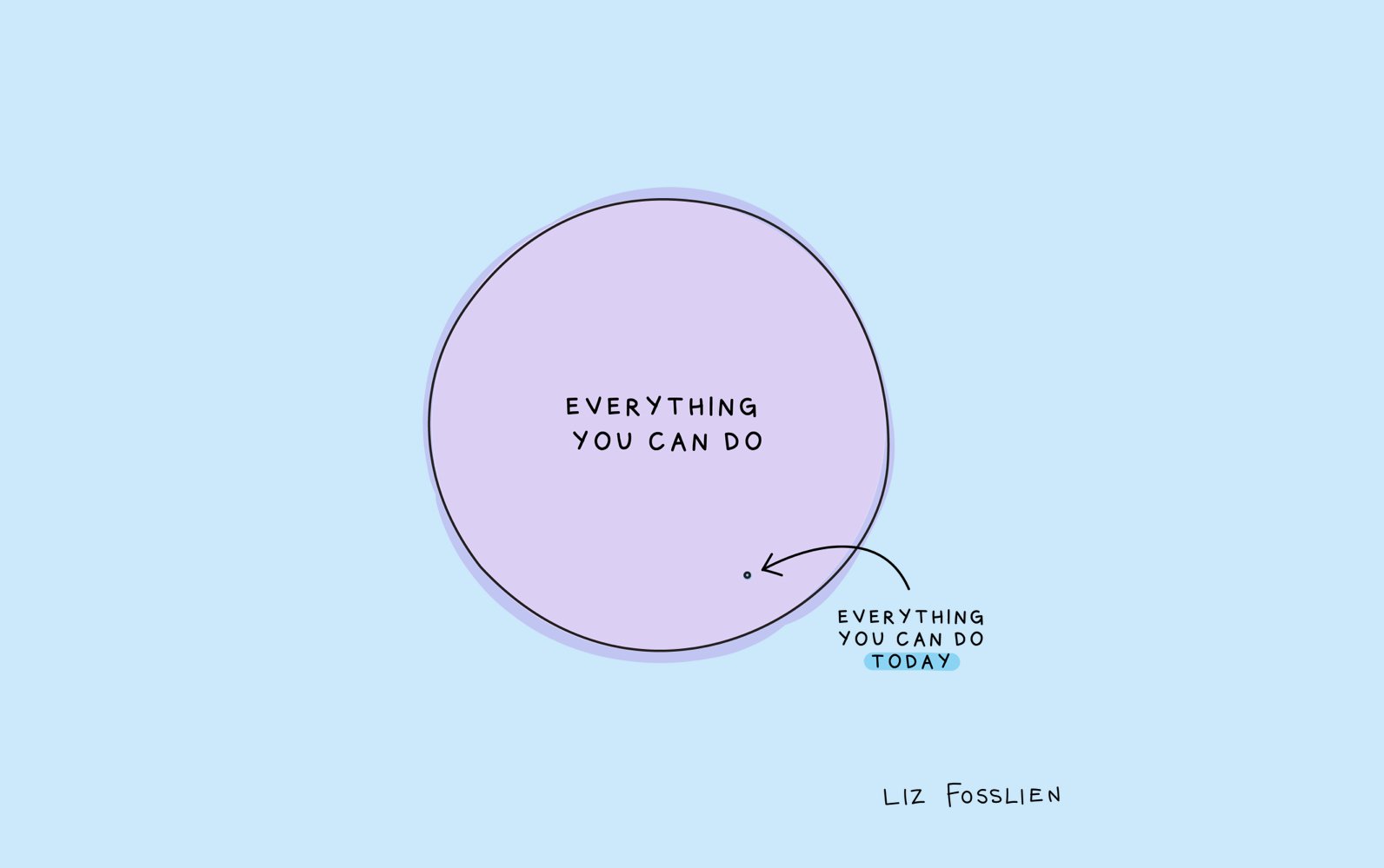
An illustration showing everything you can do, and what you can actually do. By Liz Fosslien.
There are also some great resources and helpful and inspiring images at fosslien.com. I think Liz and Molly are creating quality content that is incredibly useful for all of us, even more so for leaders. You can subscribe to Liz and Molly’s newsletter at lizandmollie.com.

Everything I write is ..
Photo by DJ Johnson on Unsplash
“I’m a writer, and everything I write is both a confession and a struggle to understand things about myself and this world in which I live. This is what everyone’s work should be…whether you dance or paint or sing. It is a confession, a baring of your soul, your faults, those things you simply cannot or will not understand or accept. You stumble forward, confused, and you share. If you’re lucky, you learn something.”
– Arthur Miller

Don’t get impatient
Things take time. Don’t get impatient.
“This is one more piece of advice I have for you: don’t get impatient. Even if things are so tangled up you can’t do anything, don’t get desperate or blow a fuse and start yanking on one particular thread before it’s ready to come undone. You have to realize it’s going to be a long process and that you’ll work on things slowly, one at a time.”
Via the wonderful Swissmiss.

Rules for people and teams working together
During my weekly review and clear-out of my inboxes I did a deep-dive into the Photos app and I found this rules that I saved back in 2016.
I think they’re a great set of rules that are even more relevant after the last two years of the pandemic. With apologies for not being able to provide credit to the original author and poster.
During my weekly review and clear-out of my inboxes I did a deep-dive into the Photos app and I found this rules that I saved back in 2016.
I think they’re a great set of rules that are even more relevant after the last two years of the pandemic. With apologies for not being able to provide credit to the original author and poster.
It's ok to...
- say "I don't know”
- ask for more clarity
- stay at home when you feel ill
- say you don't understand
- ask what acronyms stand for
- forget things
- introduce yourself
- depend on the team
- ask for help
- not know everything
- have quiet days
- have loud days
- to talk, joke and laugh
- put your headphones on
- say "No" when you're too busy
- make mistakes
- sing
- sigh
- not check your email out of hours
- not check your email constantly during hours
- just Slack it
- walk over and ask someone face-to-face
- go somewhere else to concentrate
- offer feedback on other people's work
- challenge things you're not comfortable with
- say yes when anyone does a coffee run
- prefer tea
- snack
- have a messy desk
- have a tidy desk
- work how you like to work
- ask the management to fix it
- have off-days
- have days off


How to lead and support an exhausted team
Leaders aren’t therapists and shouldn’t try to be. But people are coping with collective grief and trauma on a global scale, which means leaders have to learn and exercise new skills. HBR
We remain in challenging times. Leaders must be aware of the landscape and issues impacting their teams and the people in their lives as we work our way through this.
Two of the most important things you can do are:
Lead by example - which means ensuring that you are managing your own stress and recovery cycles.
Make sure that your team are having their own downtime and recovery periods.
A great read from HBR with recommended action points for all leaders.


Strategies for inspiring a company’s social media followers
Recently, Forbes asked me how businesses can inspire their followers on social media. For me, inspiration comes from living your values and building a brand that’s known to care. We need to communicate positive messages and …

Photo by Priscilla Du Preez on Unsplash
I’m proud to have been admitted to the Forbes Communications Council. This is an invitation-only community where senior-level communications and public relations executives can share their professional insights and experience.
Recently, Forbes asked 14 of us how businesses can inspire their followers on social media.
For me, inspiration comes from living your values and building a brand that’s known to care. We need to communicate positive messages and empower people to implement positive change—for themselves, their families, communities and work.
You can see my contribution on Forbes here.

Finding A New Normal: Embracing Flexibility For A Better Era Of Working (Forbes)
I am delighted to share my first contribution to @Forbes Communications Council, titled ‘Flexibility For a Better Era of Working’.
Leaders across different sectors can create a ‘new normal’ working model focusing on clear communication. By enabling emerging perks around flexibility, whether working remotely or not, organisations can ensure that all colleagues feel equally included.

Photo by Shridhar Gupta on Unsplash
I am delighted to share my first contribution to @Forbes Communications Council, titled ‘Flexibility For a Better Era of Working’.
Leaders across different sectors can create a ‘new normal’ working model focusing on clear communication. By enabling emerging perks around flexibility, whether working remotely or not, organisations can ensure that all colleagues feel equally included.
Joining the Communications Council has provided me with a fantastic opportunity to share personal experiences of managing office culture remotely. I look forward to continuing my collaboration with Forbes, sharing further expertise, discussing these topics with fellow Council members, and having a positive impact.
Please find the full article here: Finding A New Normal: Embracing Flexibility For A Better Era Of Working.

Set smarter goals at work to better measure performance
With the end of the year approaching for many of us in jobs, annual review and appraisal season is almost upon us. Learn how to set smarter goals to measure performance better.
With the end of the year approaching for many of us in jobs, annual review and appraisal season is almost upon us.
While this may be back to front, I want to talk about goals in the workplace in this post. Some refer to them as key performance indicators (KPIs), others as objective and key results (OKRs). Whether you use KPI or OKR, they both measure performance against a documented goal.

Photo by Charles Deluvio on Unsplash
I am certain that you’ve heard of SMART goals. Smart goals refer to goals that are:
Specific
Measurable
Achievable
Relevant
Timed
An example SMART goal for a salesperson would look like this:
To achieve a 10% year-on-year increase in sales in 2021 on sales made in 2020 as measured by closed deals as of 31 December 2021. :
Specific: The goal is specific as it states time, performance metric, comparative results.
Measurable: The objective is measurable, as it documents a percentage improvement and specifies closed deals and a date.
Achievable: While each situation varies and there will, of course, be sales situations and markets where a 10% increase in sales is not achievable. The number used in this example may be achievable, particularly if you compared it to a goal to achieve a 300% increase in sales.
Relevant: The goal is relevant to a salesperson who would set and agree to such a goal.
Timed: The goal states both the end date and the comparative period in time.
While SMART goals add the relevant framework to performance management and goal setting, they exclude two crucial elements that make SMART goals smarter. From my experience, you should also ensure that in setting a SMART goal, you are equipped for the task and have the resources to achieve the task.
Equipped: If the salesperson does not have a source of leads, prospects, advertising, product or services to sell, they are not equipped to do the task.
Resourced: In addition, the goal is at risk if they do not have the available time or resources such as hardware, software, sales support, assistants, and whatever key resources are essential to achieving the goal.
Using the leads generated by marketing activity and networking, with sales and administrative support, in 2021, achieve a 10% year-on-year increase on sales made in 2020 as measured by closed deals as of 31 December 2021.
This revised goal is smarter than the original goal. In addition, this change puts some of the onus for achieving the goal on the organisation and the employee.
In 2022, I recommend you consider making SMARTER goals with your teams and for yourself.

Who works for who, and why it matters to you?
In your job who do you work for, and who works for you? Your perspective on this can be key in setting yourself and your teams up for success.

Erik Mclean on Unsplash.
In my career so far, I have managed hundreds of people. I've managed small teams and large teams. I've lead teams in multiple countries and industries, in one physical location, and virtual and remote teams across multiple offices and timezones.
The critical question is, who works for who?
Most people believe that the team I have work for me, and any org chart or hierarchy would support that. My employer or customer has hired me to do a job. That's true, just as I've hired my team members and contractors to do a job.
But my job, similar to yours, is to enable my team to do their job. We should resource our teams, equip them with software and hardware, tools and platforms, and training. In addition to this, we must shield them from pointless interruptions within the organisation, the demanding customers, and low-value work. We intercept, deflect, and handle the interruptions that they don't need to avoid slowing them down or distracting them.
By taking this approach, my team can get their job done and deliver on their goals and objectives and the work we have tasked them to do.
I believe that looking at this question in the inverse provides a different perspective. This approach focuses me on enabling my team to do their job. Meaning that team members can do the job I've hired them for, not fighting for scarce resources or drowning in politics, confrontation, and time-wasting.
It also positions each of us as leaders with a function or team performing and delivering a high-quality service. By enabling our teams to do their job correctly, they can also develop their skills, strengths, and careers and grow their sense of job satisfaction.
The combined effect of this also stacks the odds in our favour and enables us to work in roles that we enjoy — a win-win for everyone.