
AI retrofit vs AI-native: Why some economies will leapfrog the West
Western businesses are retrofitting AI into systems built for the last century. Meanwhile, greenfield economies are building AI-native from scratch — and the compounding advantage is already opening a gap we can't afford to ignore. Here's what that means for leaders, marketers, and entire economies.
I recently came across a comment that stopped me cold: "Western businesses are trying to retrofit AI into systems built for the last century. Meanwhile, other economies are using AI as the foundation to build everything from scratch."
That simple observation carries profound implications for competitiveness, growth, and the future shape of global commerce. Because the difference between retrofitting AI and building with AI isn't just technical—it's strategic, economic, and ultimately existential for businesses and entire economies.
Let me explain why this matters, and what we should do about it.
The jet engine on a steamship
Think of it this way: Western economies are like trying to renovate a 150-year-old building while people still live inside it. We're attempting to modernise systems, processes, and institutions that were designed for an entirely different era—paper-based workflows, hierarchical org charts, industrial-age economics. We're bolting jet engines onto steamships and hoping they'll fly.
Greenfield economies, by contrast, are designing the aircraft around the engine. They're building AI-native systems from day one—new financial infrastructure, digital-first government services, education systems designed for an automated workforce. They're not constrained by what came before because, in many cases, what came before never fully arrived.
This isn't about technology adoption rates. It's about the fundamental architecture of economic systems and the compounding advantages that flow from getting that architecture right.
What "retrofitting AI" really means
When we talk about retrofitting AI in Western economies, we're not just talking about adding ChatGPT to our workflow or deploying a few automation tools. We're talking about forcing transformative technology into environments fundamentally hostile to transformation.
Legacy infrastructure
Western businesses operate on IT stacks that are decades old. We have fragmented data scattered across incompatible systems, brittle processes that break when you change them, and technical debt that accumulates faster than we can pay it down. Every AI initiative must navigate this complexity, integrate with these systems, and somehow avoid breaking what's already there.
Legacy institutions
Beyond the technology, we face legacy institutions with their own gravitational pull. Procurement cycles that take months. Compliance requirements that assume human decision-making. Governance committees that meet quarterly. Union negotiations that protect existing roles. Public trust issues that make rapid change politically unacceptable. These aren't bugs—they're features of mature, democratic, regulated economies. But they create friction that slows AI adoption to a crawl.
Legacy economics
We operate in expensive labour markets with complex tax regimes and risk-heavy regulation. Our markets are saturated, our customers have high expectations, and our business models are optimised for incremental improvement, not revolutionary change. AI must fit into these constraints, which means the most radical applications—the ones that could truly transform productivity—get tamed before they reach production.
Legacy psychology
Perhaps most importantly, Western businesses face legacy psychology. We're trying to use AI to protect jobs, protect status, and protect established business models. We ask: "How can AI make our current approach better?" rather than "What would we build if we started today?" That defensive posture ensures AI gets deployed for efficiency gains rather than fundamental reimagination.
The result? Retrofit AI tends to create incremental productivity gains, increased complexity, governance overhead, political resistance, and organisational drag.
The built-from-zero advantage
Now contrast this with regions building AI-native systems from the ground up. In parts of Asia, the Middle East, Africa, and Latin America, AI is landing in contexts with fundamentally different constraints—or rather, with fewer constraints altogether.
Systems still being formed
When you don't have decades of accumulated complexity, you can make different choices. You can centralise data early, standardise workflows across entire sectors, build national digital ID systems that enable seamless service delivery, and design education programmes around automation rather than retrofitting curricula designed for the industrial age. You're not trying to thread AI through existing systems—you're building the systems around AI.
No sunk-cost bias
There's no emotional attachment to "the way we've always done it" because, in many cases, there isn't a "way we've always done it." There's no old org chart to defend, no legacy service model to protect, no established brand promise that constrains what's possible. This psychological freedom is as valuable as any technical advantage.
Mobile-first already happened
Many of these regions already leapfrogged desktop computing, branch-based banking, and physical-first government services. They went straight to mobile, straight to digital, straight to cloud-native infrastructure. So AI isn't a radical disruption—it's the logical next step in a pattern of leapfrogging that's already proven successful.
The result? Built-from-zero AI creates leapfrogging effects, simpler architectures, faster iteration cycles, fewer legacy constraints, and entirely new business models rather than just efficiency improvements on old ones.
The compounding advantage
Here's where this gets strategically critical: we're not talking about a one-time advantage. We're talking about compounding returns that create widening gaps over time.
Retrofit economies improve linearly. They increase efficiency by 20%, reduce costs by 15%, speed up delivery by 30%. These are real gains, but they're bounded by existing organisational structures, legacy workflows, and what's politically acceptable. You get better at what you already do.
Greenfield economies improve exponentially. They can redesign entire service models, remove whole categories of work, build AI-native institutions from scratch, and create new market structures that simply weren't possible before. And because they're designing from zero, each improvement builds on the last. Every AI-enabled process creates data that trains better models. Every automation creates capacity for more automation. Every new digital service creates platform effects that enable more services.
That compounding is the real competitive threat. Not that they're faster today—but that the gap will widen, year after year, as their systems compound and ours merely improve.
What leaders should do now
This isn't a counsel of despair. It's a call to action. Because while we can't escape our legacy entirely, we can choose how we respond to it.
For business leaders: Create greenfield inside your company
Don't try to retrofit AI into everything. Instead, create AI-native units within your organisation—separate data infrastructure, separate workflows, separate decision rights. Build them around outcomes rather than roles. Treat AI as a new class of labour, not as software. And give these units the freedom to move fast without being dragged down by legacy systems.
Specific actions:
Launch an AI-native business unit with its own P&L
Invest in data infrastructure like it's a product, not a cost centre
Replace committee-based governance with rapid experimentation cadences
Redesign roles around what humans do uniquely well, not around what they've always done
Build partnerships with AI-native companies rather than trying to build everything in-house
For marketers: Move from production to decision advantage
Stop thinking about AI as a tool for creating more content faster. Start thinking about it as infrastructure for decision advantage—faster customer insight loops, always-on campaign optimisation, dynamic segmentation that adapts in real-time, and personalisation engines that learn from every interaction.
Build AI-native brand systems where tone, messaging, claims, proof points, and creative assets are generated dynamically based on context rather than produced in batches and rolled out quarterly. This is the difference between using AI to make your current approach faster and using AI to do things that were never possible before.
For policy and institutions: Enable, don't just limit
AI governance must be enabling as well as limiting. Yes, we need guardrails—but we also need acceleration lanes. Build national AI infrastructure: compute access for research and startups, public datasets that enable innovation, digital ID systems that make seamless service delivery possible, and education pipelines that prepare people for an AI-augmented workforce.
The countries that get this balance right—protection without paralysis—will maintain competitiveness even with legacy constraints.
AI isn't just a tool. It's an operating system.
The fundamental insight here is that AI is not bolt-on technology. It's not another software category. It's a foundational layer—an operating system for how work gets done, how decisions get made, how value gets created.
And just as you can't bolt a modern operating system onto an ancient computer, you can't bolt AI onto legacy systems and expect transformative results. You get incremental improvements. You get efficiency gains. But you don't get the compounding advantages that come from building AI-native from the start.
Some economies and enterprises will figure this out faster than others. They'll create greenfield zones where AI can compound. They'll redesign from first principles rather than retrofit from necessity. They'll build the aircraft around the engine rather than bolting the engine onto the steamship.
The question for the rest of us is simple: Will we recognise this shift fast enough to respond? Or will we keep trying to renovate the building while the neighbours are constructing something entirely new next door?
The competitive gap is already opening. The only question is how wide we'll let it get before we act.
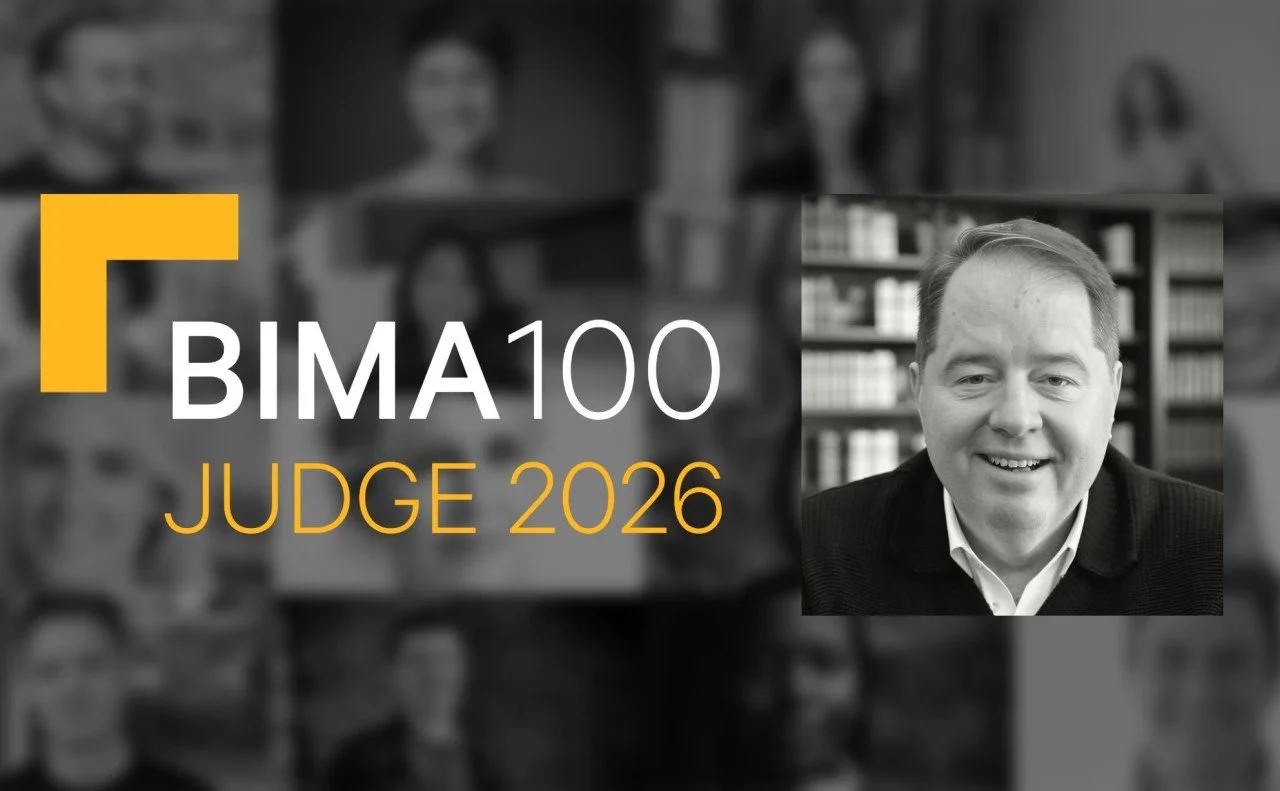
BIMA 100 Awards 2026
I'm honoured to have been accepted as a Judge for the BIMA 100 Awards 2026 — one of the most prestigious celebrations of people shaping the future of digital. Here's what it means to me and why this recognition matters.
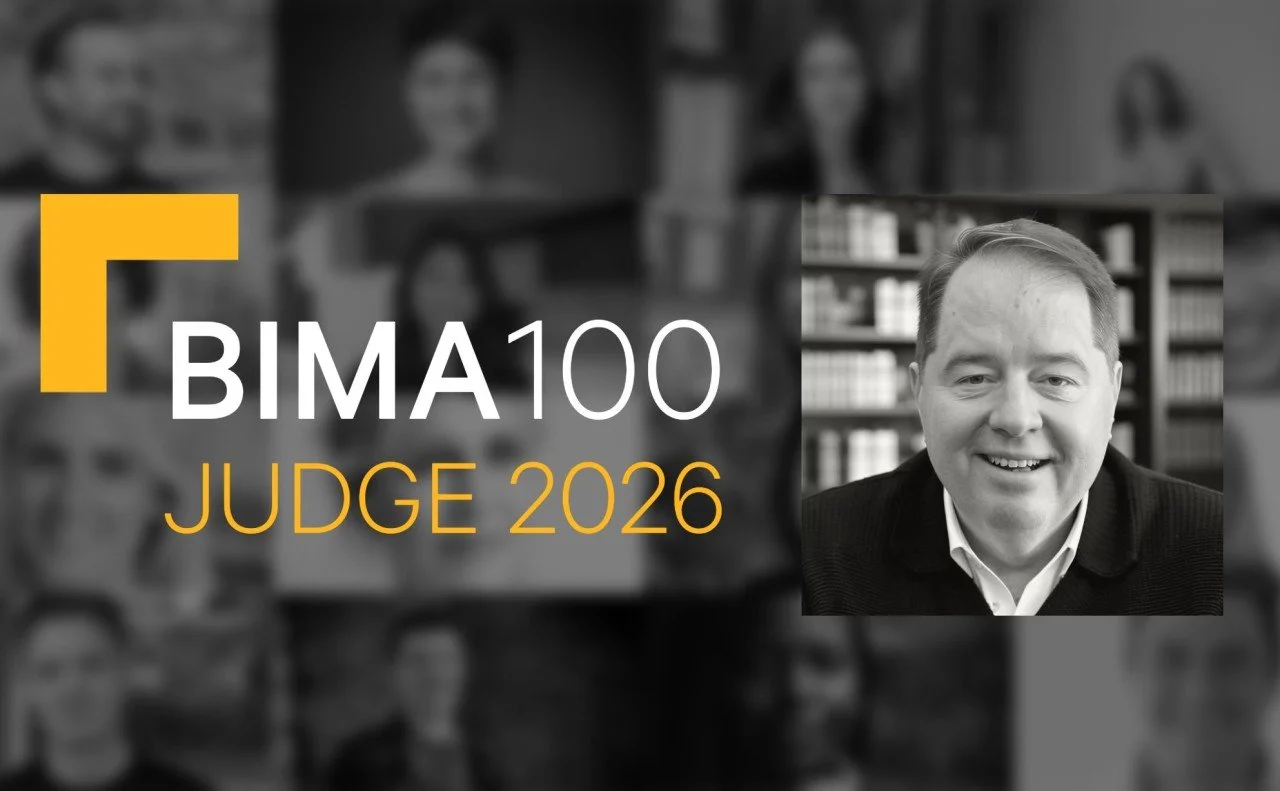
Honoured to share that I’ve been invited and accepted as a Judge for the BIMA 100 Awards 2026.
Every year, the BIMA 100 celebrates the people shaping our industry right now — the leaders, pioneers, entrepreneurs and change‑makers who inspire progress and create real impact. This isn’t about projects or campaigns; it’s about people and the influence they have on the future of digital.
The BIMA 100 Ceremony is one of the standout moments in the industry calendar, bringing together the top 100 brightest digital stars, fellow judges and the wider digital community. I’m incredibly proud to be part of recognising the talent that continues to move our industry forward.
Looking forward to celebrating the innovators and rising stars in March.

Turn Your Personality Assessments into AI Superpowers
Turn CliftonStrengths, DISC, and personality assessments into AI-powered coaching tools. Step-by-step guide with prompts, case studies, and real results.
A Guide to Embedding CliftonStrengths, DISC, Working Genius, and more
You've done the work. CliftonStrengths? Check. DISC profile? Done. Working Genius? Completed. You've read the reports, nodded at the insights... and filed them away.
Now what?
Here's the problem: According to research by the Institute for Corporate Productivity, only 14% of professionals actively use their assessment insights beyond the initial 90-day window. Not because the insights lack value—because they're not embedded into daily work.
The shift: AI can turn static assessments into active tools.
Think of it like this:
Your assessments describe your operating system.
AI can help you run it — on purpose.
Let's walk through how.
Quick Start: 3 Steps to Get Started Today
Time required: 10 minutes
If you only do the minimum, do this:
Pick one assessment (CliftonStrengths is ideal) and locate your report
Upload it to ChatGPT or Claude (or paste the key sections)
Ask: "Based on my strengths, what should I focus on this week, what should I delegate, and what risks should I watch?"
That alone can produce surprisingly practical value.
Now let's go deeper.
Why This Matters: AI Can Amplify Self-Awareness (If You Let It)
Self-awareness influences how we make decisions, communicate under pressure, delegate work, and design our environment for success. The challenge isn't insight—it's integration.
Assessments tend to be episodic: we take them, discuss them, feel seen, then return to business as usual.
AI changes that because it's:
Always available
Context-aware (increasingly)
Able to reflect patterns back to you
Perfect for reminders, scripts, templates, and reframing
In other words, AI can act like a mirror—but also like a co-pilot.
Missed opportunity: Most professionals have powerful insight locked in static reports.
New opportunity: Make that insight operational through AI.
Step-by-Step Guide: Turning Assessment Data into AI Agents
Step 1: Gather Your Data (and Make It AI-Ready)
Time: 15 minutes
Start by collecting every relevant artifact:
CliftonStrengths (Top 5 or full 34 report)
DISC report
Working Genius profile
Quest or other leadership assessments
360 feedback summaries (optional)
Personal values exercises
Recommended structure:
Create a folder: /Personal Insight Pack/
Inside, include:
01_CliftonStrengths.pdf
02_DISC.pdf
03_WorkingGenius.pdf
04_Role_Context.md (your current role, goals, constraints)
If you can't upload PDFs easily, create My_Profile.md with:
Top strengths and definitions
Key motivators
Blind spots
Communication preferences
Stress triggers
Ideal working environment
✓ Checkpoint: You should have at least one complete assessment in a digital, searchable format.
Step 2: Choose Your AI Platform
Time: 5 minutes
Platform Best For Key Strength Ideal If... ChatGPTOngoing coaching, memory Persistent "always-on" assistant behavior You want a 24/7 coach that grows with you ClaudeDeep document analysis Excellent at synthesizing long reports You want thoughtful reflection and clean frameworks MistralPrivacy-sensitive setups Local/offline control You want your profile stored privately
Rule of thumb:
Ease and speed → ChatGPT or Claude
Control and privacy → Mistral (local)
✓ Checkpoint: Pick one platform and create an account (or confirm you already have access).
Step 3: Embed Your Profile (Teach the AI Who You Are)
Time: 20 minutes
This is the step most people skip—and it's the step that creates the magic. Choose your level:
Level 1: Custom Instructions (lightweight)
Paste a short profile into custom instructions:
"I prefer bullet points and practical advice."
"When giving advice, anchor it in my Responsibility, Achiever, and Strategic strengths."
Level 2: Upload Reports (high leverage) - Recommended
Upload your PDFs and use this prompt:
"Read these reports and summarize my key operating principles. Then create a coaching profile you will use in all future responses. Focus on:
How I make decisions at my bestMy predictable blind spotsCommunication patterns that work for meWork I should prioritize vs. delegate"
Level 3: Personal Knowledge Base (advanced)
Put all documents into a vector database (Notion, Obsidian) and connect via an AI tool that supports retrieval.
Most professionals don't need Level 3. Level 2 is the sweet spot.
✓ Checkpoint: Your AI should now have access to your assessment data and be able to reference it in responses.
Step 4: Create AI Agents (Make This Useful)
Time: 30 minutes
You're not building "one AI"—you're building specialized agents. Think of them like roles on your team.
Agent 1: The Strengths-Based Project Manager
Purpose: Plans work aligned to your strengths, flags tasks for delegation
Setup prompt:
"Act as my Strengths-Based Project Manager. When I share a goal or project, break it into tasks and tell me:
Which tasks leverage my strengthsWhich tasks drain my energy (and who might handle them better)What weekly rhythm maximizes my effectiveness"
Use case: Weekly planning, goal breakdown, workload optimization
Agent 2: The Communication Coach (DISC-Aware)
Purpose: Helps craft messages for different personality types
Setup prompt:
"Act as my DISC-Aware Communication Coach. When I share a message draft, rewrite it for:
High D (direct, results-focused)High I (enthusiastic, relationship-focused)High S (steady, supportive)High C (detail-oriented, analytical)
Also flag potential blind spots in my natural communication style."
Use case: Difficult conversations, stakeholder management, performance feedback
Agent 3: The Leadership Mirror
Purpose: Reflects blind spots under pressure, helps you respond intentionally
Setup prompt:
"Act as my Leadership Mirror. When I describe a frustrating situation, help me:
Identify which of my strengths might be overplayedSee the situation from other perspectives (especially opposing styles)Craft a response that's strategic, not reactive
Reference my [insert top 3 strengths] as defaults to watch."
Use case: Conflict navigation, burnout prevention, decision fatigue
Agent 4: The Working Genius Workflow Optimizer
Purpose: Identifies which parts of a project energize you vs. drain you
Setup prompt:
"Based on my Working Genius profile [Wonder, Invention, Discernment, Galvanizing, Enablement, Tenacity], analyze projects and tell me:
Which phases I should ownWhich I should delegateHow to structure meetings to maximize team genius zones"
Use case: Team planning, project staffing, meeting design
✓ Checkpoint: Create at least one agent before moving to Step 5.
Step 5: Iterate and Refine (Train It Like a Human Coach)
Time: 10 minutes/week
AI improves when you treat it like a relationship, not a vending machine.
Weekly reflection prompt:
"Here's what I did this week. Based on my strengths and profiles, tell me:
What I should do more ofWhat I should stop doingWhat I should delegateWhat risks I'm ignoring"
Over time, your AI becomes less generic and more you-shaped.
✓ Checkpoint: Schedule a recurring 10-minute Friday reflection to update your AI.
Real-World Applications (What This Can Look Like in Practice)
Case Study 1: Sarah, VP of Marketing — Team Dynamics
Challenge: Sarah (High D on DISC, CliftonStrengths: Command, Activator, Strategic) was frustrated with her detail-oriented project manager who seemed "slow and overly cautious."
AI intervention: Used her Communication Coach agent to rewrite feedback.
Prompt:
"I need to give feedback to my High C project manager about moving faster. Here's my draft: 'We need to stop overthinking this and just execute.' Rewrite for a High C audience."
AI output:
"I appreciate your thoroughness in identifying potential issues. To help us meet our deadline, could we establish a decision-making framework? For example: If we're 80% confident after analyzing X, Y, Z factors, we move forward. This way, we maintain quality standards while increasing speed. What concerns would you want addressed before implementing this?"
Result:
Project manager felt respected, not rushed
Agreed to the framework
Velocity increased 40% without sacrificing quality
Timeline: Immediate impact; relationship improved over 3 weeks
Case Study 2: Jake, Sales Director — Process Optimization
Challenge: Jake (Working Genius: Galvanizing + Enabling) was landing 60% of first meetings but losing 80% at the proposal stage. He excelled at energizing prospects but dreaded administrative follow-through.
AI intervention: Built a Workflow Optimizer agent that systemized his genius zone.
Solution:
Jake records 5-minute voice memos after client calls
AI converts them into detailed proposals using Jake's communication patterns
Proposals include specific templates aligned to prospect's DISC style
Admin assistant handles formatting and follow-up
Result:
Close rate jumped from 12% to 45%
Jake's energy and focus improved (stopped dreading "proposal hell")
Sales cycle shortened by 18 days
Timeline: 6 weeks from setup to full implementation
Case Study 3: Marcus, Engineering Director — Decision Fatigue
Challenge: Marcus (CliftonStrengths: Learner, Input, Intellection, Analytical, Strategic) was saying yes to every "strategic" project, leading to overwhelm.
AI intervention: Created a decision filter based on his strengths.
Prompt:
"Based on my CliftonStrengths, create a decision filter for new commitments. Include red flags and green flags."
AI output:
Green Flags (Say Yes):
✅ Requires strategic thinking and pattern recognition
✅ Involves learning new domains or technologies
✅ Needs deep analysis before action
✅ Aligns with long-term vision
Red Flags (Say No):
🚩 Primarily execution-focused (delegate to Achiever/Responsibility strengths)
🚩 Requires quick decisions without analysis time
🚩 Focuses on maintaining status quo vs. innovation
🚩 Drains intellectual curiosity
Scripts for declining:
"This is valuable work, but it's better suited for someone with Achiever energy. Let me recommend [name]."
"I'm at capacity on strategic initiatives. I can advise, but can't own execution."
Result:
Reduced active projects from 12 to 5
Increased strategic impact on core priorities
Eliminated Sunday night anxiety
Timeline: Immediate clarity; behavioral shift over 4 weeks
Overcoming Challenges (and Doing This Responsibly)
Privacy Concerns
Concern: "My assessment data is personal."
Response:
Don't upload anything you wouldn't store in cloud documents
Remove identifying information if needed
Use local models (Mistral, Llama) for maximum privacy
Most assessment insights don't require encryption—they're developmental, not diagnostic
AI Limitations
Concern: "Can AI really understand me?"
Response:
AI can:
Hallucinate
Oversimplify
Reinforce bias
Treat it as:
✅ A thinking partner
✅ A mirror
✅ A coach-in-training
NOT as:
❌ Your identity
❌ Your therapist
❌ Your decision-maker
Over-Reliance Risk
Concern: "Won't this make me dependent on AI?"
Response:
Use AI to amplify intuition, not replace it. The goal is self-awareness activation, not self-trust outsourcing.
Best practice: Run important decisions through both your AI coach AND a trusted human mentor.
Time Investment
Concern: "I don't have time for this."
Response:
Quick-start sidebar: 10 minutes
Week 1 ROI: Better delegation decisions, at least one avoided conflict
Ongoing: 10 minutes/week for reflection
The question isn't "Do I have time?"—it's "Can I afford NOT to optimize how I work?"
Skepticism About Value
Concern: "This feels like over-engineering self-help."
Response:
Fair. Start with one scenario. If it saves you 30 minutes or prevents one conflict, it's worth it. If not, you've lost 10 minutes.
But ask yourself: What's the cost of continuing to:
Take on work that drains you?
Miscommunicate with people who think differently?
Ignore your blind spots until they create problems?
Outdated Assessments
Concern: "My assessments are 5+ years old."
Response:
Core strengths and personality traits remain relatively stable. If your assessment is >7 years old or you've had major life changes, consider a refresh—but start with what you have.
Try This Now: Copy-Paste Prompt (Instant Value)
Copy this prompt and paste it into ChatGPT or Claude:
I'm going to paste my CliftonStrengths Top 5, DISC style, and Working Genius profile.

Your job is to become my strengths-based AI coach.

Please:
1. Summarize how I operate at my best
2. Identify my predictable blind spots
3. Create a weekly operating rhythm that maximizes my strengths
4. Give me a "stop doing" list
5. Give me 5 scripts for saying no politely but firmly

Before you finalize, ask me 5 clarifying questions about my role, goals, and current challenges.

[PASTE YOUR OWN ASSESSMENT DATA HERE]
This prompt forces the AI to:
Synthesize
Personalize
Operationalize
Create usable artifacts
Template Checklist: Embed Your First Profile in AI
Use this checklist:
☐ Choose one assessment report
☐ Extract top insights (strengths, blind spots, motivators)
☐ Upload or paste into AI platform
☐ Add custom instructions: "Respond using my profile"
☐ Create one agent (Project Manager, Communication Coach, or Leadership Mirror)
☐ Run one real scenario through it
☐ Refine prompts based on results
☐ Schedule weekly 10-minute reflection
Start small. Win fast. Expand.
The 30-Day Strengths-AI Challenge
Want to see real results? Commit to this 30-day progression:
Week 1: Foundation
Set up your first agent (Strengths-Based Project Manager recommended)
Use it for one planning session
Note what worked and what felt off
Week 2: Application
Use your agent for one real decision (delegation, communication, or prioritization)
Collect feedback: Did the output match reality?
Adjust your agent's instructions based on what you learned
Week 3: Refinement
Add context from your week (what drained you, what energized you)
Test your agent on a challenging scenario
Compare AI suggestions to your gut instinct—where do they align? Where do they differ?
Week 4: Expansion
Either add a second agent OR deepen the first with more nuanced instructions
Share one insight or win with your team
Decide: Is this worth continuing?
Optional: Share your results with #AIStrengthsCoach on LinkedIn—we'll feature the most creative implementations.
References and Resources
Assessment Resources
CliftonStrengths: Gallup CliftonStrengths
DISC: Wiley's Everything DiSC
Working Genius: The Table Group - Working Genius
Quest Leadership Assessment: Quest Assessment
AI Implementation Guides
OpenAI Custom Instructions: OpenAI Documentation
Claude Projects: Anthropic Claude Guide
Mistral AI: Mistral.ai Documentation
Further Reading
StrengthsFinder 2.0 by Tom Rath (Gallup Press, 2007)
The Working Genius by Patrick Lencioni (Wiley, 2022)
"The Power of Personality Assessments in AI Coaching" - Harvard Business Review, 2024
AI Superpowers: China, Silicon Valley, and the New World Order by Kai-Fu Lee (Houghton Mifflin Harcourt, 2018)
Final Note: The Future Is Already Here
Right now, embedding your strengths data into AI is an advantage.
Soon, it will be standard.
As AI becomes more context-aware—integrating calendars, emails, work products, and goals—we'll see:
AI strength coaches embedded in workplace tools (Microsoft 365, Google Workspace)
Team-level AI facilitators that reduce interpersonal friction
Personal "operating systems" that guide daily decisions
Digital artifacts that preserve leadership wisdom across career transitions
The professionals who win won't be those with the most assessments.
They'll be the ones who turn self-awareness into execution.
So here's your challenge:
Pick one assessment. Pick one AI tool. Build your first agent this week.
Make your self-awareness operational.
Because your strengths were never meant to sit in a PDF.
They were meant to drive your life.
About This Guide: This post was crafted using CliftonStrengths, DISC, Working Genius insights, and AI collaboration (Claude, ChatGPT, Mistral AI). It's designed to be immediately actionable—start with the Quick Start section if you want results today.
Questions or case studies to share? Connect on LinkedIn or use the contact page here.

Prompting Your Prompt: The Simple Method That Multiplies AI Output Quality
A practical method to improve AI output quality: refine your prompt with structure, intent, and constraints before generating. Better results, every time.

Most people believe the key to getting better results from AI is writing better prompts.
That’s true — but incomplete.
The biggest improvement I’ve found comes from a different approach, use one AI model to write a powerful prompt for another AI model.
I use multiple tools in my workflow:
ChatGPT (OpenAI)
Mistral AI
Claude (Anthropic)
Lumo (Proton)
Perplexity
Copilot (Microsoft)
Midjourney
When used individually, each tool is valuable. When used together, the results compound.
The core idea
Instead of writing a prompt and running it immediately, I do this:
Draft a rough prompt
Ask a second model to create an “elite prompt” for ChatGPT
Paste that elite prompt into ChatGPT
Iterate using the best tool for the job (research, editing, structure)
The elite prompt is often long — sometimes two or three A4 pages in length. But the output quality is dramatically higher.
Why it works
This works because:
different models have different strengths
detailed prompts reduce ambiguity
better prompts act like better briefs (and briefs drive outcomes)
If you only take one thing away from this:
Stop trying to be a better prompter. Start using AI to design better prompts.
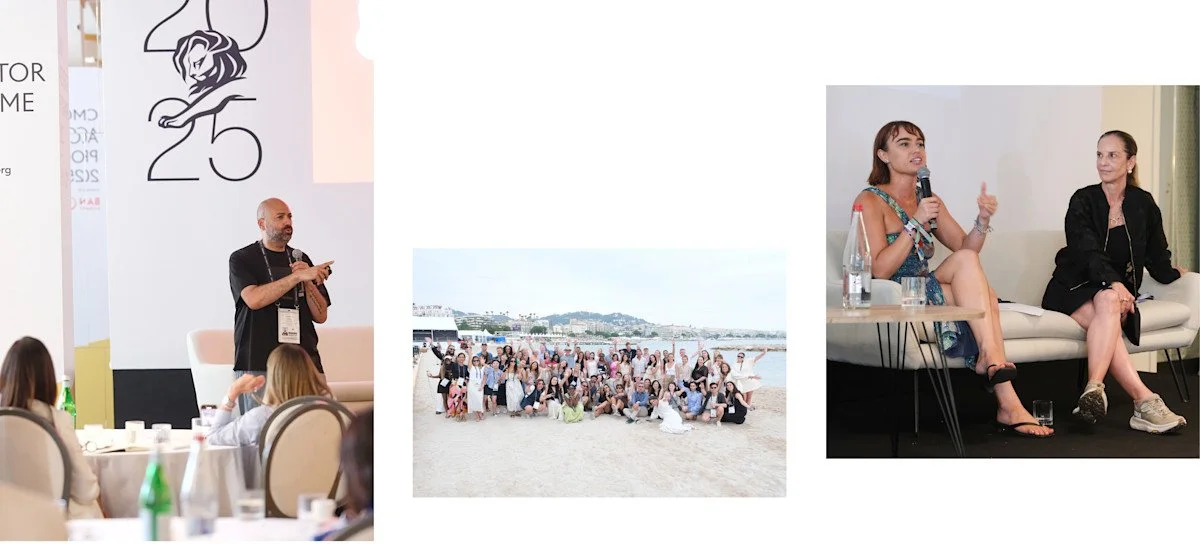
The Human Advantage: Reflections from the LIONS CMO Accelerator, London
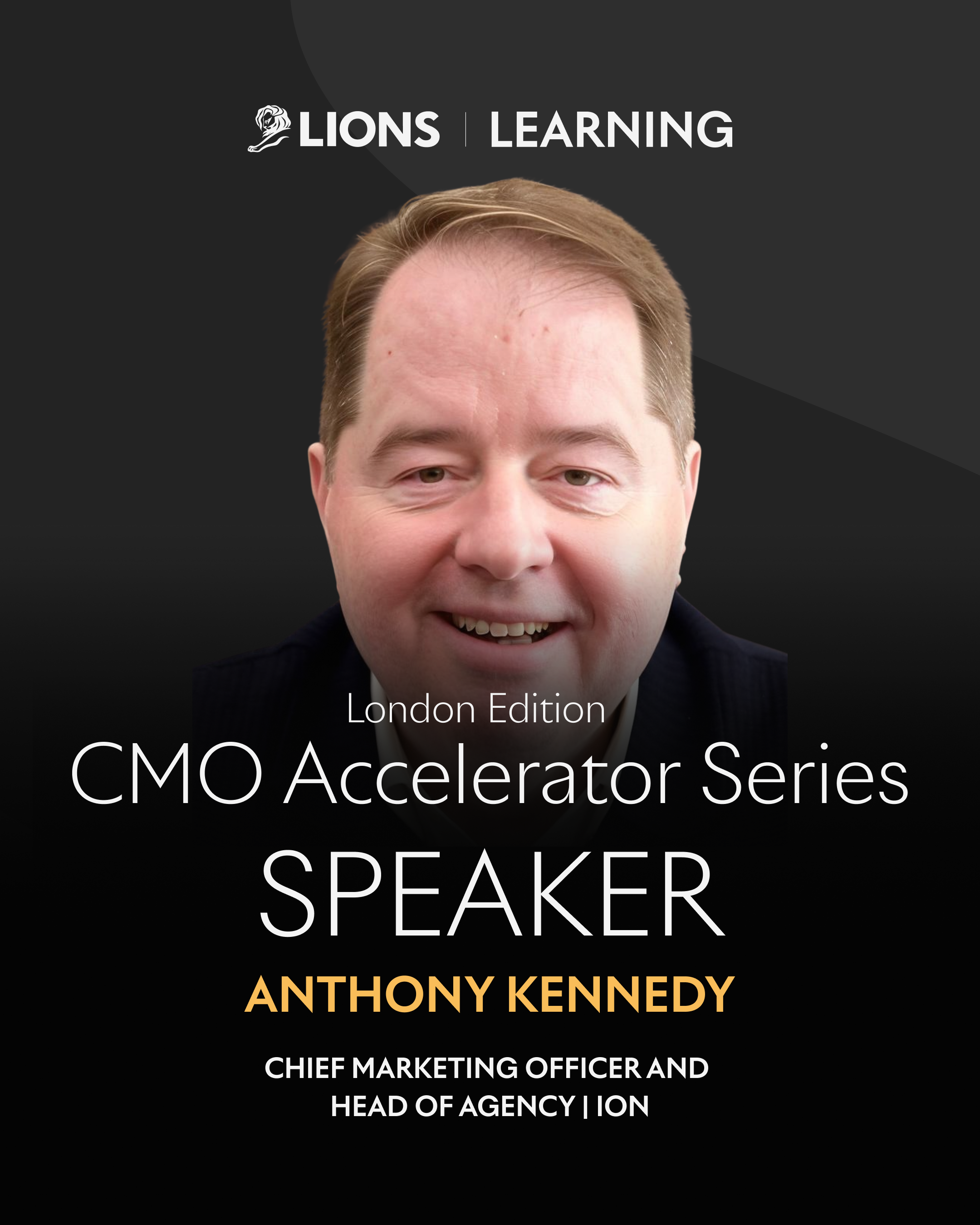
In December 2025, I had the privilege of speaking at the LIONS CMO Accelerator Series in London, joining a room of senior marketing leaders navigating one of the most consequential shifts our profession has faced.
Building on my two previous LIONS presentations at Cannes Lions in 2022 and 2024 my session focused on AI. Not as a technology update, but as a leadership challenge.
The temptation when discussing AI is to start with tools, platforms, and vendors. I chose a different entry point: judgment. Because AI does not replace the fundamentals of marketing. It exposes whether we have them.
From funnels to learning systems
One of the core ideas I explored was the need to move from marketing funnels to marketing learning systems. AI works best when organisations treat marketing as a continuous feedback loop rather than a sequence of campaigns.
That shift sounds technical. It is not. It is cultural.
Learning systems demand clarity of intent, data discipline, and the courage to say no. Without those, AI simply accelerates noise.
Strategy still means sacrifice
A recurring theme in the room was overload. Too many tools. Too many vendors. Too many experiments without ownership.
The essence of strategy has not changed. It is still about sacrifice.
In a landscape with more than 15,000 marketing technology vendors, the competitive advantage does not come from doing more. It comes from choosing deliberately: which platforms to commit to, which problems to solve, and which capabilities to build internally.
AI rewards focus. Indecision is expensive.
Agents, automation, and the next generation of teams
We also discussed AI agents and automation, not as abstractions, but as practical extensions of teams. We are likely the last generation of leaders who will manage human-only teams.
That reality raises new questions for CMOs: governance, training, data quality, and accountability. AI needs ownership. It needs rules. It needs leaders who understand both its power and its limits.
The human edge does not disappear
The most important part of the session came at the end.
I heard this first, I recall, from Mark Ritson. AI is not going to kill marketing. And it is not going to save it either.
The only thing truly threatened by AI is low-imagination work. When everyone has access to the same models, the only remaining competitive advantage is taste. Taste cannot be automated. It cannot be commoditised. It cannot be downloaded.
Technology accelerates. Feelings scale. But meaning still comes from us.
The next creative revolution will not be AI-driven. It will be human-AI hybrid craft, where imagination, judgment, and emotional intelligence are amplified rather than outsourced.
Speaking at the LIONS CMO Accelerator was a reminder that the future of marketing will not be decided by tools alone. It will be shaped by leaders willing to combine discipline with creativity, and efficiency with meaning.
That is where the real advantage lies.

Forbes CMO Summit Europe 2025: Depth, not novelty
Returning to London for the Forbes CMO Summit Europe 2025 felt less like attending an event and more like re-joining an ongoing conversation.
The theme — What Matters Most — could easily have drifted into abstraction. Instead, the Summit doubled down on realism. Once again, Seth Matlins proved to be an exceptional steward of the dialogue, holding the line against platitudes and keeping the focus firmly on lived experience at the top of the profession.
What impressed me most in 2025 was the confidence of the room. There was less anxiety about tools, platforms, or trends, and more discussion about judgment, leadership, and organisational clarity. Marketing was treated not as a service function, but as a core driver of enterprise value.
Across the sessions, a few quiet themes emerged:
Growth remains the mandate, but the path to it is rarely linear
Measurement is essential, but never complete
Creativity and effectiveness are inseparable, not competing forces
The Summit reinforced something that is easy to forget amid constant change: progress in marketing does not come from chasing novelty. It comes from better questions, better thinking, and better conversations between people who take the responsibility of influence seriously.
I appreciated the continuity from the previous year — not because the ideas were repeated, but because they were deepened. The absence of ego, the willingness to admit uncertainty, and the focus on long-term impact made this another genuinely valuable experience.
Events like this, Seth’s experience and insight, and discussions with industry leaders remind me why I remain optimistic about the future of marketing — not because the challenges are smaller, but because the thinking is getting sharper.
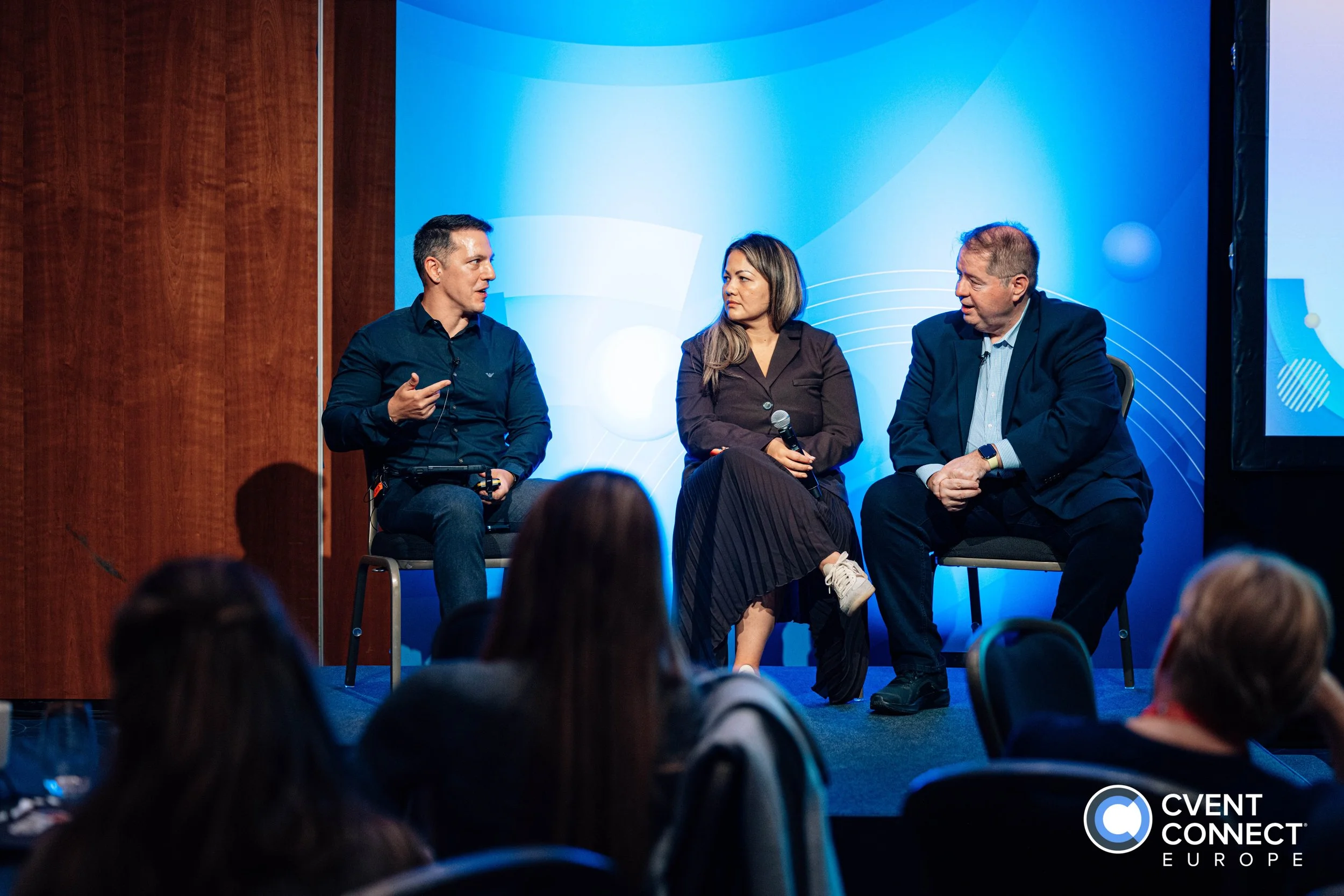
Event-Led Growth and the Discipline of ROI: Cvent Connect Europe 2025
In November 2025, I was invited to speak on two panels at Cvent Connect Europe, joining marketing leaders from across Europe to explore how events can deliver genuine, sustained return rather than short-lived activity.
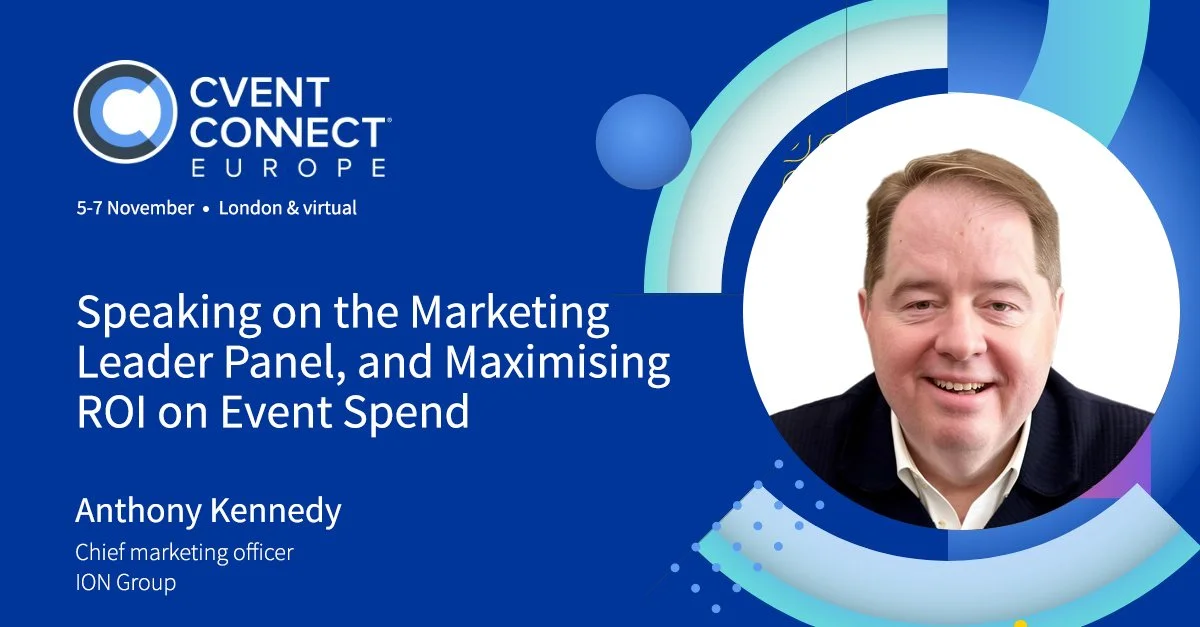
Cvent Connect has always been an interesting forum because it sits at the intersection of strategy, execution, and accountability. The conversations are not about whether events matter — that debate is settled — but about how leaders ensure that time, attention, and investment compound rather than dissipate.
The first panel focused on marketing leadership — specifically how senior marketers make decisions in environments where certainty is rare, scrutiny is high, and trade-offs are unavoidable. What struck me was how consistent the challenges were across sectors: aligning events to commercial outcomes, resisting vanity metrics, and maintaining strategic clarity when teams are under delivery pressure.
The second panel explored maximising ROI on event spend, a topic that often attracts simplistic answers. The discussion moved quickly beyond tools and dashboards into more uncomfortable but more useful territory:
What problem is this event actually solving?
What behaviour do we expect to change as a result?
How will this investment compound over time rather than peak on the day?
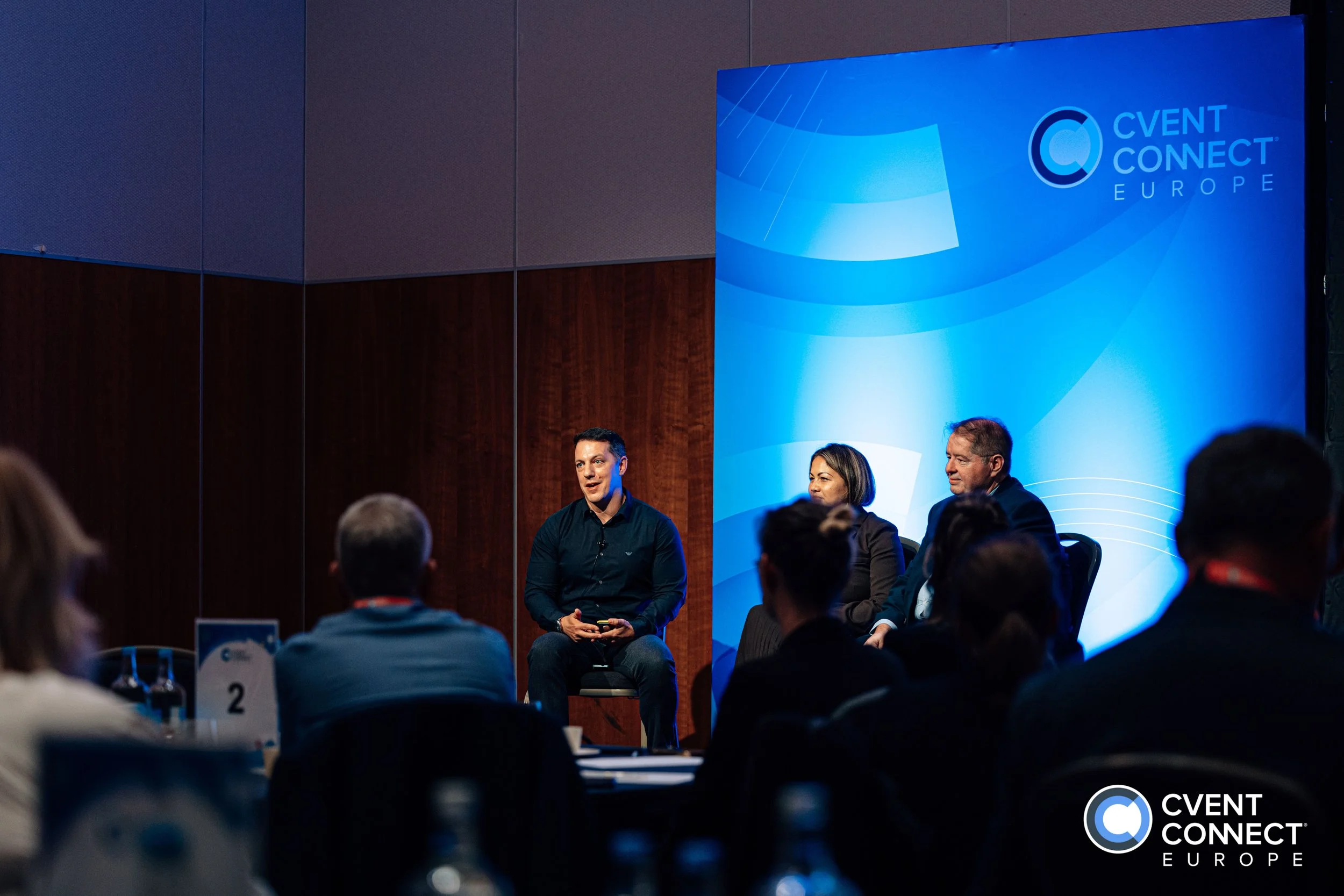
My contribution centred on a belief I hold strongly: events should be treated as platforms, not moments. When designed properly, they can create learning loops, relationships, and commercial momentum that extend far beyond the physical or virtual experience itself. When designed poorly, they become expensive theatre.
What I valued most about Cvent Connect Europe 2025 was the quality of the dialogue. There was little appetite for buzzwords, and a strong shared interest in effectiveness, discipline, and long-term value creation. The room was full of leaders who understand that ROI is not just measured — it is designed.
I left the event encouraged for event-led growth. Not because the challenges facing marketing are getting easier, but because the conversations are getting better and in the age of artificial intelligence it is even more important to come together in our communities..

A Profound Bet
Migrants make a profound, risky bet to leave home and build something new. This courageous leap into the unknown is driven by the desire to create a better future. Learn more about the extraordinary phenomenon of migration and its impact.

Something Extraordinary Is Happening All Over the World
“Migrants are individuals making a profound, risky bet that by undertaking the rare and difficult decision to leave home, they can build something new.”
This powerful statement by Lydia Polgreen, "Something Extraordinary Is Happening All Over the World" The Great Migration Series (paywall/archive), encapsulates the essence of migration: a courageous leap into the unknown driven by the desire to create a better future.
As someone who has experienced the challenges and rewards of migration firsthand, I find these words both poignant and inspiring.

The CEO’s Job Isn’t What You Think It Is
Discover the true role of a CEO beyond being perfect in every business aspect. Learn how effective CEOs focus on winning by building strong teams and leveraging their strengths to drive company success.

Why being great at everything misses the point entirely. The CEO’s Only Job Is to Win.
The CEO's main duty is to ensure the company wins. As Brian Borque aptly puts it:
“The only universal job description of a CEO is to make sure the company wins.”
This statement encapsulates the essence of leadership, emphasizing that the CEO's role is not to be a jack-of-all-trades but to guide the organization toward success.
There is a pervasive myth in boardrooms, backchannels, and startup circles that a CEO must be a flawless superhuman, excelling in operations, finance, sales, product, people management, and strategy. This belief suggests that to lead effectively, one must have a comprehensive understanding and hands-on expertise in every aspect of the business. However, this is a dangerous misconception that can actually hinder a CEO’s effectiveness.
Central to a CEO's duties is the company's success, not the micromanagement of every detail or expertise in every function. Winning can mean different things depending on the context—profitability, market share, mission delivery, or even survival. But the ultimate goal remains the same: to steer the business toward victory. The most effective CEOs I’ve encountered, like each of us, are often deeply flawed in certain areas, yet they excel in their role by focusing on the outcome rather than personal perfection.
For example, some CEOs are visionary leaders who may struggle with detailed financial analysis, while others are sales geniuses who find hiring a challenge. These leaders understand that their job is to build a strong, complementary team that can cover their weaknesses. They hire the right people, delegate tasks, and create a culture where everyone is working towards a common goal. Instead of wasting time trying to become proficient in every area, they leverage the strengths of their team to achieve the company’s objectives.
This approach to leadership is what sets successful CEOs apart. Their clarity of purpose and ability to focus on the big picture, rather than getting bogged down in minutiae, is what drives the company forward. So, the next time someone criticizes a CEO for not being “across the detail,” “not technical enough,” or “not a natural manager,” consider this: is the company winning? Are they building a team and culture that can sustain that success?
A CEO's true measure of leadership and their company's success is not about being perfect, but about winning and creating an environment where the company can flourish and achieve its goals.
Effie UK: Judging effectiveness, not just creativity
What judging Effie UK reinforced about effectiveness
This year, I had the privilege of serving on the Effie UK judging panel, reviewing work where effectiveness is not an afterthought, but the point.
Effie has always occupied a distinct place in our industry. It asks a harder question than most awards: Did it actually work?
What struck me most during the judging process was how rare true clarity still is. The strongest entries were not those with the most sophisticated models or the densest data, but those that demonstrated a clean line of sight between problem, strategy, execution, and outcome.
Effectiveness is not about proving everything. It is about proving the right things.
The best cases showed restraint. They made deliberate choices. They resisted the temptation to retrofit narratives around results and instead demonstrated how judgment shaped decisions before money was spent.
Judging Effie is a reminder that marketing credibility is earned when creativity and commercial outcomes are treated as partners, not rivals. When one is privileged at the expense of the other, effectiveness suffers.
Effie UK continues to play an essential role in keeping our industry honest. We need that discipline more than ever.